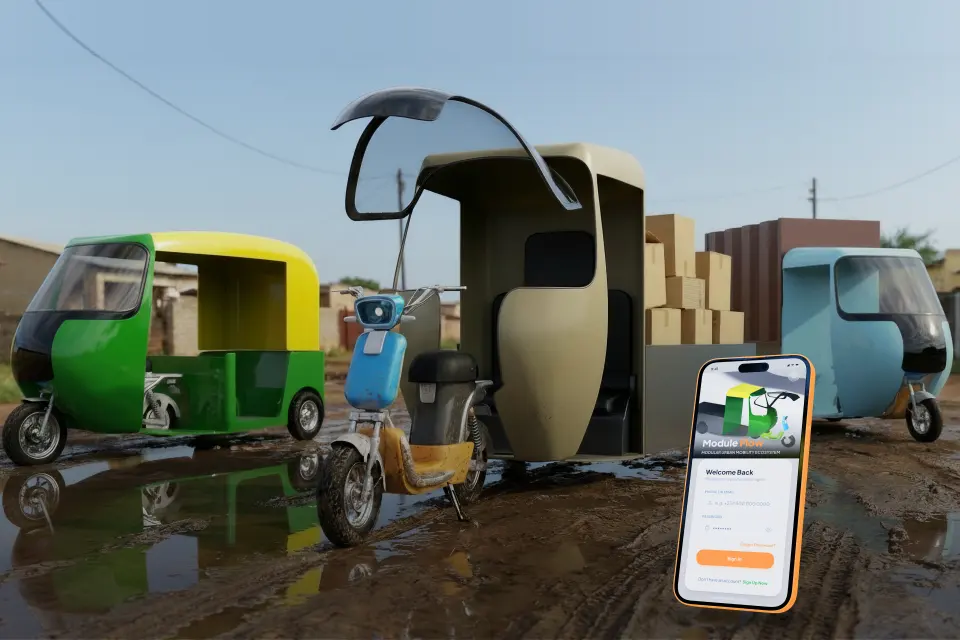
One platform for every last-mile load.

A modular electric scooter, swappable pods and a landmark-based app for first- and last-mile delivery in African communities.

No addresses, rough roads, idle vehicles.

Most African communities have no proper addresses, roads are unpaved and delivery costs are high. Parcels get stolen and there is nowhere safe to collect them. Operators buy a bike for cargo and a rickshaw for people, and both sit idle off-peak.

From bubble forms to pressed metal.

The form was rectified into pressed metal and a tubular steel frame, so local micro-factories can build and repair it.

07:00–10:00A day in the life of a driver

The morning rush.

The operator docks the passenger pod at a ModuleFlow hub to serve the suburban commute, earning through the peak transit hours.
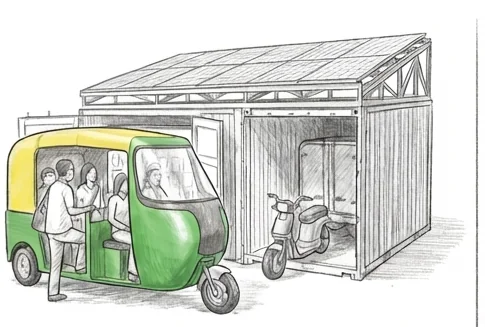
Pencil sketch: a passenger pod full of commuters beside a hub with a solar roof
01The morning rush
11:00–15:00

The mid-day pivot.

As passenger demand drops, the driver returns to the hub, swaps to the cargo pod and fulfils e-commerce or grocery deliveries.
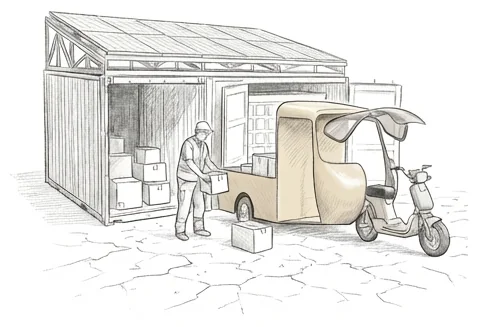
Pencil sketch: a driver loading parcels from the hub into a cargo pod
02The mid-day pivot
16:00–19:00

The essential service.

With the cold-storage pod, the driver carries medical and vaccine deliveries to local clinics, a vital community service.
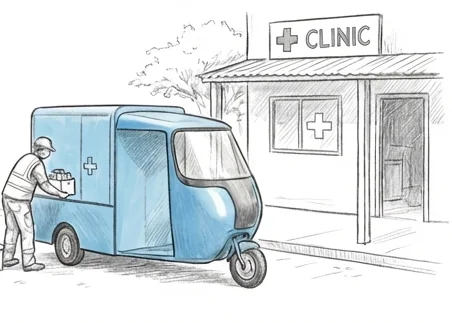
Pencil sketch: a driver carrying a medical box from a cold-storage pod to a clinic
03The essential service

A full day on one charge.

80–120kmRange per charge, enough for a full day of sub-urban delivery
4kWHub motor, high torque for muddy, unpaved inclines
45km/hTop speed, governed
72V100 Ah LFP battery, swappable
2hFast charge, or a swap at the hub
At the hub

The power cycle.

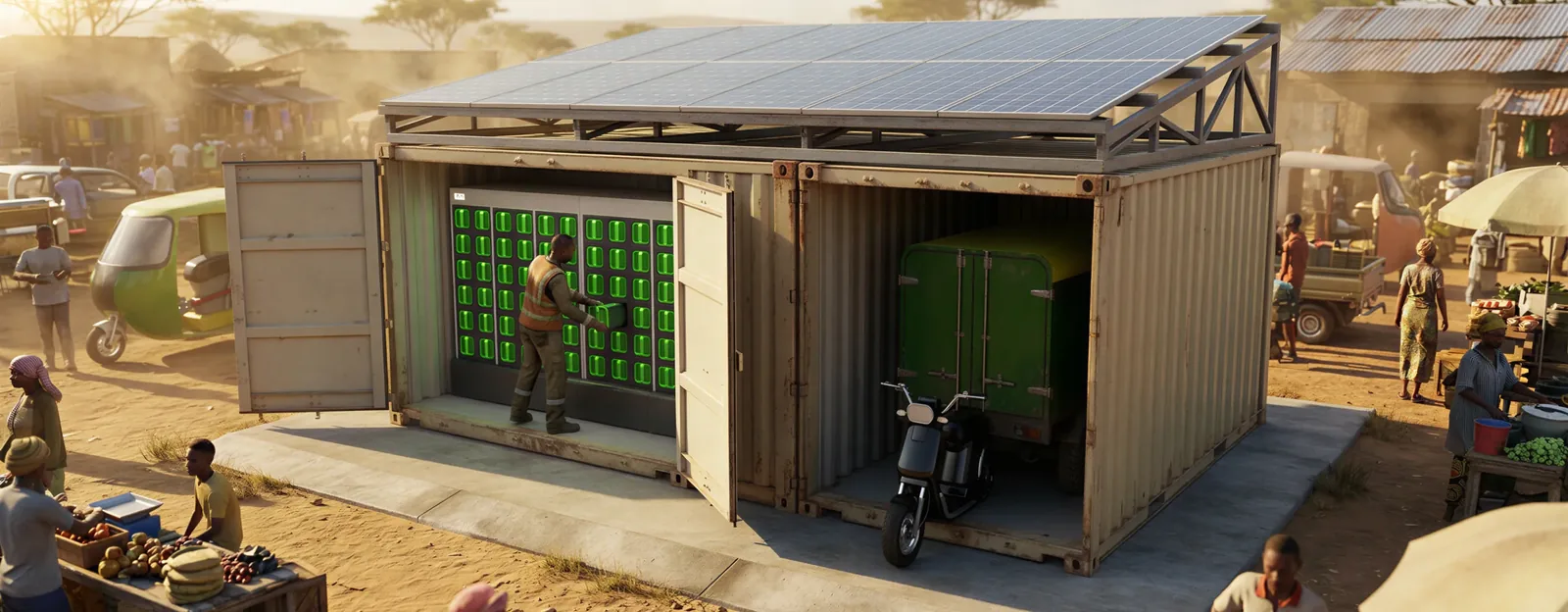
In under 60 seconds, the driver swaps the 72 V 100 Ah LFP battery at a solar-powered hub, so the vehicle never sits idle while charging.
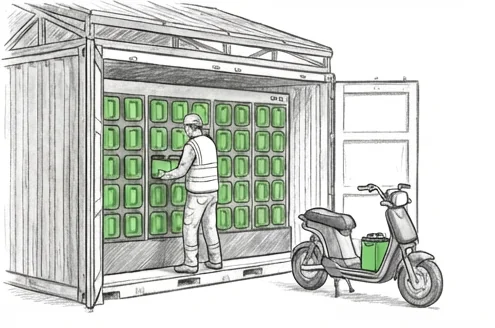
Pencil sketch: a driver taking a battery from a wall of charging packs in the hub
04The power cycle

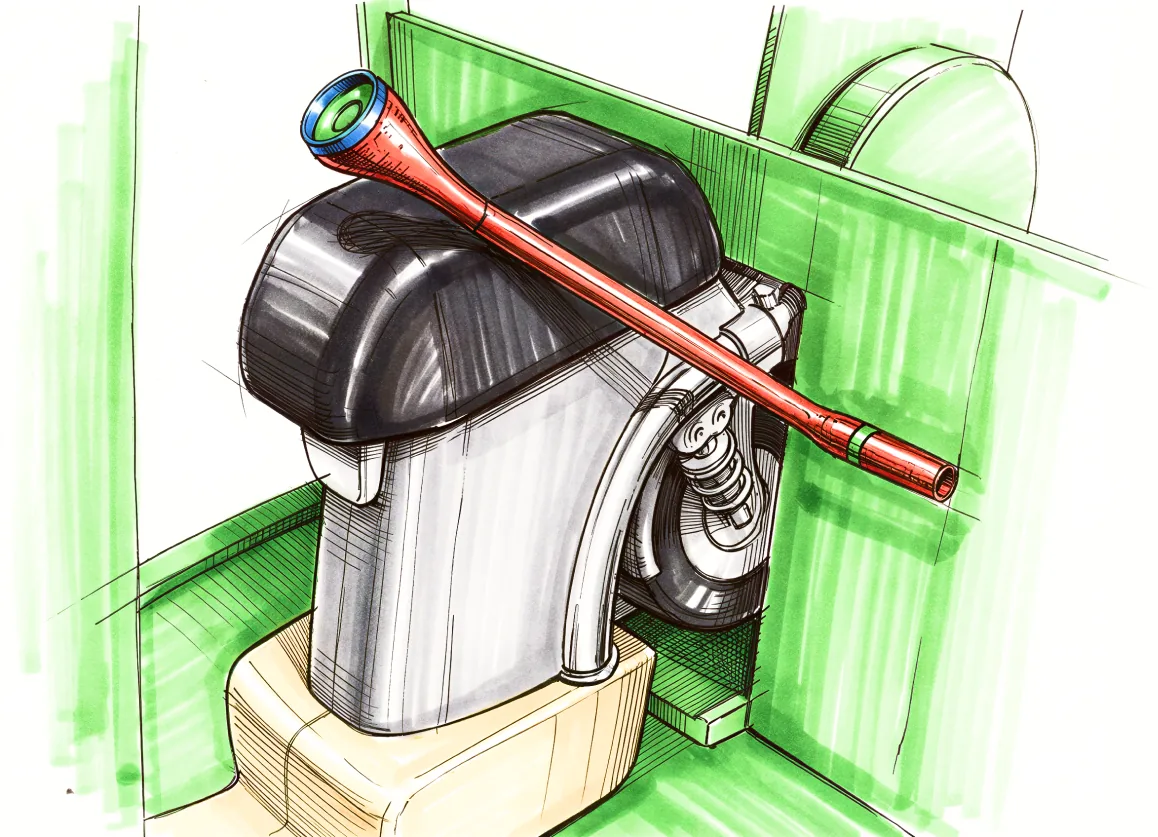
A tool-less docking interface.

Designed for manual operation by a single person, with no external tools or hydraulic power.
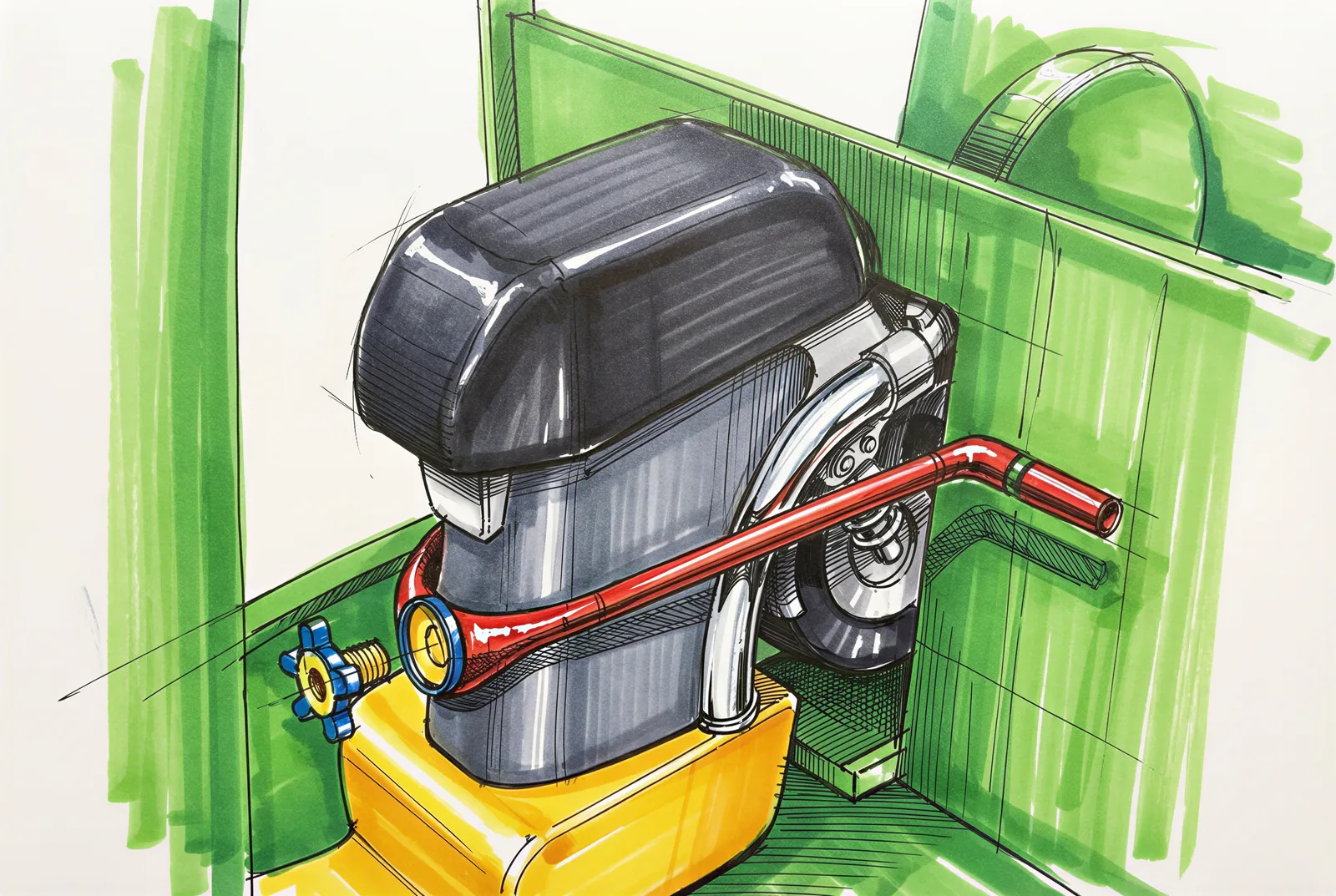
Marker rendering of the docking interface, engaged: the red over-centre latch closed around the scooter's battery, the blue safety interlock knob screwed inThe docking interface disengaged: the red latch handle raised, the scooter free to roll out of its wheel cradle
Engaged stateDisengaged state

One person, under five minutes, no tools.

5minUnder five minutes to change a pod, by one person

A hub every 5–10 km.

Render of a ModuleFlow hub at golden hour: two shipping containers under a solar roof, a wall of green battery packs, a green pod and a scooter inside, a market around it

Small storage points at known places in the community. People drop off goods, the hub sorts them, riders pick them up for the last mile.

One rider, one bike, unlimited uses.

01Morning · Commute1 + 3Passenger pod: a driver and three passengers, 350 kg payload
02Mid-day · Deliveries2.2m³Cargo pod, 500 kg payload
03Afternoon · Clinic run2–8°CCold-storage pod, medicine kept cool for 12 hours

Landmarks, not street addresses.

An app that works on any phone, even old ones without internet. Customers pick a landmark, the market, the clinic, the water point; riders see which jobs to take and which pod to use.

Customer: order confirmationPicked up at a landmark, the route on a map, the price
Rider: on the jobDirections to the pickup point, then the drop-off
Hub: the day at a glancePackages in to store, ready for pickup, space left

One rider, one bike, every load.

Vehicle2700 × 1350 × 1750 mm, 180 mm ground clearance
Scooter1950 × 425 × 860 mm, 90 mm rear suspension travel
Powertrain4 kW hub motor, swappable 72 V 100 Ah LFP battery, 80–120 km range
Tools
RhinoKeyShot
RecognitionToyota Logistic Design Competition 2026, semi-finalist (open category)
Year2026
MethodDouble Diamond
  1. Discover
  2. Define
  3. Develop
  4. Deliver
ModuleFlow
Back to index
Loading the model0%

Boards from the project

How it was designed

Double Diamond

  1. Discover

    No addresses, unpaved roads and theft, and operators paying for a bike and a rickshaw that sit idle off-peak.

  2. Define

    Four pillars: range, an inclusive cocoon for passengers, local manufacture and repair, full use of every vehicle.

  3. Develop

    Bubble forms to pressed metal and tubular steel; a tool-less docking interface; pods for people, cargo and cold chain.

  4. Deliver

    Scooter, pods, an offline landmark-based app and solar hubs, submitted to the Toyota Logistic Design Competition 2026.